

THE DATA ANALYSIS PROCESS
Semasphere addresses complex data analysis challenges which fit within the wider Explore-Formulate-Assess-Revise (EFAR) framework. The EFAR approach implements the data analysis process as an iterative cycle of hypothesis formulation, testing and refinement against the data background. The hypothesis(es) evolve(s) in this process, and are ultimately validated as new and valuable pieces of knowledge, characterisations or descriptions in the problem domain:
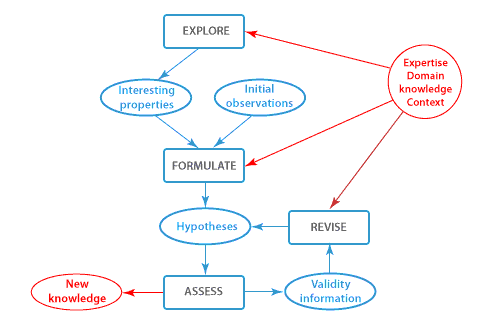
Click on the individual boxes corresponding to EFAR data analysis phases for a more detailed description of each phase.
An important feature of three of the four EFAR processing phases is the fact that they are knowledge-guided:
- The analyst's expertise which is reflected in the assumptions s/he makes and the heuristics s/he employs to explore the data, to formulate and to revise hypotheses.
- The domain knowledge which provides semantics for the behaviours analysts retrieve and look at in the underlying data.
- The specific problem context which sets constraints and creates specific objectives for the data analysis.